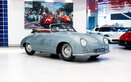
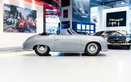
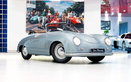
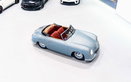
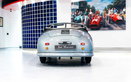
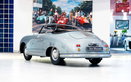
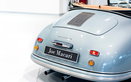

1952 Porsche 356
Pre-A Split-Screen Cabriolet-
Year of manufacture1952
-
Mileage1 530 km / 951 mi
-
Car typeConvertible / Roadster
-
DriveLHD
-
ConditionRestored
-
Interior colourRed
-
Number of doors2
-
Number of seats4
-
Location

-
Exterior colourBlue
-
GearboxManual
-
Drivetrain2wd
-
Fuel typePetrol
Description
The Porsche 356 represents the very beginnings of one of the world's most celebrated sports car manufacturers. First introduced in 1948 and initially constructed in Gmünd, Austria, the 356 was the first production car to bear the Porsche name. By 1950, production had moved to Zuffenhausen, Stuttgart, where Reutter began manufacturing the steel-bodied Coupés and Cabriolets that would establish Porsche's reputation for exceptional engineering and craftsmanship. These early cars were painstakingly hand-built, with each body requiring approximately 530 to 550 hours of labour, and featured the distinctive two-piece split windscreen that would remain in production until 1952.
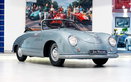
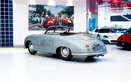
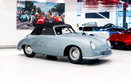
The example offered here is an exceptionally rare 1952 Porsche 356 Pre-A Split-Screen Cabriolet, originally delivered to Otto Glöckler in Frankfurt, Germany, on 19th March 1952. Produced during the earliest years of Porsche's development, these distinctive split-screen models are amongst the rarest and most desirable variations of the original 356, with research suggesting that approximately 260 examples survive worldwide across both Coupé and Cabriolet body styles.
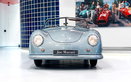
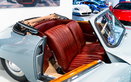
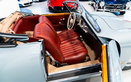
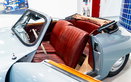
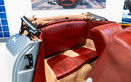
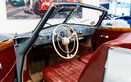
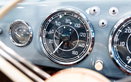
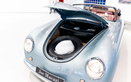
Factory records confirm that the car was originally specified with a 1,500cc engine, an important development in the evolution of the early 356, together with desirable options including vented wheels with turbo rings, fully reclining seats and a kilometre speedometer. The Porsche Kardex records the original exterior colour as 505 Fish Silver, while the factory production log lists 531 Mode Grey. Following careful consideration during its restoration, Fish Silver was selected as the most appropriate finish, beautifully complemented by its striking red leather interior, red vinyl rear seating, beige carpeting and beige headlining.
The car's early European history is not fully documented, although it is understood to have subsequently made its way to the United States. By the 1980s, it was in the ownership of Lowell Sivey of Ohio, who began a restoration project by completely dismantling the Porsche, stripping its bodywork back to bare metal and applying primer. However, the project was never completed, and in January 1997 the car was sold to Porsche collector Mike Tuck of Belmont, California. It would remain in storage for the following thirteen years, with its bodyshell in primer and numerous original components stored separately in boxes.
In 2009, the car came to the attention of a British Porsche enthusiast, beginning the lengthy process of researching its history and establishing exactly which components remained. With the assistance of Thomas Birch of the Split Window Registry, a detailed search was undertaken through the previous owner's collection of early Porsche parts. Over two days, approximately 75% of the relevant components were successfully identified and recovered, including several exceptionally rare items such as the rear-view mirror, interior light, exterior door handles and rear number plate illumination. Even damaged or incomplete components were carefully retained to assist with the eventual restoration.
Following its purchase in September 2010, the Porsche was transported to Los Angeles before being shipped to the United Kingdom, arriving in March 2011. Shortly afterwards, the car was entrusted to renowned 356 specialist Roger Bray for an extensive restoration. The bodyshell was completely stripped and assessed before undergoing comprehensive metalwork repairs, with the structural restoration completed in February 2012. The body was subsequently prepared and refinished in Fish Silver, with the final paintwork completed in August of that year.
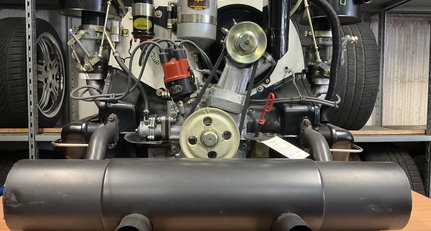
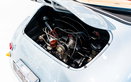
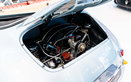
The restoration continued with the painstaking rebuilding and reassembly of the car, including the recreation of its original red leather and beige interior. Mechanically, the Porsche is fitted with a period-correct 1,500cc Type 527 engine, retaining the specification of the original power unit. A Porsche Type 519 full-synchromesh gearbox was also installed in place of the original non-synchromesh transmission. Introduced in late 1951, this gearbox was amongst Porsche's earliest fully synchronised units and provides improved usability while remaining appropriate to the car's period.
Following more than two years of extensive restoration work, the project was completed by Roger Bray in June 2013. Just two days after completion, the Porsche was presented at the Coys Concours, where it was awarded Best of Show, a remarkable achievement and testament to the quality of the restoration. The car subsequently appeared at the Warren Concours in 2016 and Heveningham Hall Concours in July 2023, while also being regularly enjoyed on the roads around London during the summer months.
Accompanied by an extensive historical file documenting its fascinating provenance, original factory specification and comprehensive restoration, this beautifully presented 356 represents an exceptionally rare opportunity to acquire one of Porsche's earliest open-top sports cars. Its striking Fish Silver and red leather colour combination, desirable 1,500cc specification, concours-winning restoration and remarkable rarity make it a particularly special example of the iconic Pre-A Split-Screen Cabriolet. Contact us now for more information or to arrange a viewing.

Watch our latest YouTube videos
More Listings related to Porsche 356


Recommended Listings