
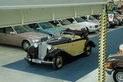
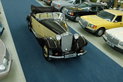
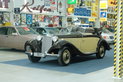
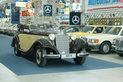

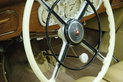
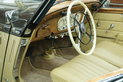
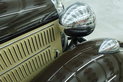
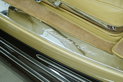
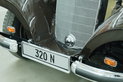
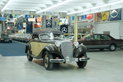
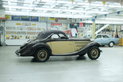
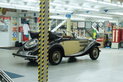
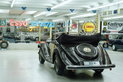
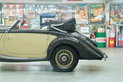
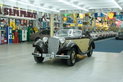
1938 Mercedes-Benz Typ 320
320 N Cabriolet A-
Year of manufacture1938
-
Car typeConvertible / Roadster
-
Chassis number408250
-
Engine number421143
-
Lot number079
-
Reference numberhg_52c450d6e98a
-
DriveLHD
-
ConditionUsed
-
Exterior brand colourBeige
-
Interior colourBeige
-
Interior brand colourLeather beige
-
Interior typeLeather
-
Location

-
Exterior colourBeige

Description
One of only 7 known existing cars
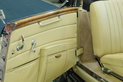
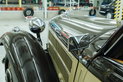
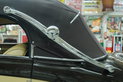
Breathtakingly beautiful body shape
Early short-wheelbase model
Restored by the most renowned workshop
Chassis no.: 408250
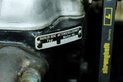
Engine no.: 421143
Paint: 412 Beige / 423 Tobacco
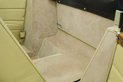
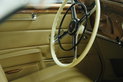
Interior: Leather beige
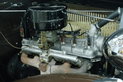
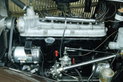
Engine displacement: 3.4 liter
Provenance:
1938 – Unbekannt, DE
09/11/1956 – David Valentine Thiele Hampson, Stevenage, UK
06/07/1957 – Anthony Victor Parker, London, UK
Then – John Davis, UK
1984 – Sold to Germany
Then – Robert Haag, DE
27/12/2016 – Peter Mooser, Muri bei Bern, CH
29/03/2024 – W. van Wuuren, Moordrecht, NL
Documents:
Dutch Kentekenbewijs (2022)
Swiss Fahrzeugausweis (2006, copy)
Insurance offer (1959)
About the model line:
W 142
When Mercedes-Benz unveiled the new Type 320 of the W142 series in the spring of 1937, Europe was still enjoying a deceptive calm. Dark political clouds were already gathering on the horizon, yet on the grand boulevards of the continent’s great capitals, elegance, comfort and refined motoring remained very much in fashion. It was precisely for this world that the new 320 had been created. Succeeding the successful Type 290, it neatly bridged the gap between Mercedes-Benz’s smaller six-cylinder models and the marque’s prestigious eight-cylinder automobiles.
Beneath its long bonnet lay a newly developed 3.2-litre inline six-cylinder engine. On paper, its 78 horsepower appeared modest, yet it was more than sufficient to propel the large Mercedes effortlessly along Germany’s still- young Autobahns. More important than outright performance was its remarkable refinement. The engine ran with scarcely a trace of vibration, giving the car precisely the sense of effortless authority expected of a Mercedes-Benz.
The W142 was equally advanced beneath the chassis. Its already proven fully independent suspension, working in conjunction with a rigid oval-tube frame, delivered an exceptional level of ride comfort. Long-distance journeys became considerably more relaxing, while the precise steering and carefully tuned suspension endowed the car with road manners that were remarkably secure by the standards of its day.
Few Mercedes-Benz model series were offered in such a wide variety of body styles. Alongside the conventional saloon, customers could choose from Cabriolet A, B and D versions, Pullman limousines and numerous special coachbuilt bodies. The open models in particular ranked among the most elegant German automobiles of their era. Outstanding craftsmanship, the finest materials and an almost limitless range of bespoke appointments ensured that no two cars were ever quite alike.
In 1938, the Type 320 underwent a comprehensive revision. The wheelbase was extended, engine output increased to 80 horsepower and numerous technical details were further refined. Externally, the car remained faithful to its elegant styling, while gaining an even more imposing presence. It is this later version that many enthusiasts regard as one of the most harmonious Mercedes-Benz designs of the pre-war period. Before passenger-car production was curtailed by the outbreak of war, a larger 3.4-litre engine was introduced in 1939, while power output remained unchanged.
With the outbreak of the Second World War, the civilian career of the Type 320 came to an abrupt end. Many examples were requisitioned by government authorities and the military, while production increasingly shifted towards wartime requirements. The W142 also served as the basis for a military Kübelwagen developed for the German armed forces. By the time production ceased in 1942, just over 7,000 examples had been built, around 5,100 of them for civilian customers. By later standards, that was a modest figure. Measured by its significance, however, it was anything but.
The W142 was neither the most spectacular nor the most expensive automobile of its time. It never needed to be. Its true strength lay in the perfect balance of elegance, technical sophistication and long-distance comfort. For that very reason, it remains one of the finest large Mercedes- Benz models of the pre-war era—an automobile that embodied the pinnacle of classic German grand touring, just before an entire age came to an end.

Watch our latest YouTube videos
More Listings related to Mercedes-Benz Typ 320


Recommended Listings


