

1970 Mercedes-Benz SL Pagode
280 SL-
Year of manufacture1970
-
Car typeOther
-
Chassis number113.044-12-020076
-
Lot number144
-
Reference numberhg_e58443366b99
-
DriveLHD
-
ConditionUsed
-
Interior colourOther
-
Location

-
Exterior colourOther

Description
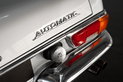
Top-of-the-range engine with automatic transmission
Timeless, classic colour combination
Regularly serviced and maintained
Delivered new in Munich
By the end of the 1950s, Stuttgart had begun grappling with a problem for which there was, strictly speaking, no solution. The task was to replace the superlative, the über-car, the Mercedes of all Mercedes: the 300 SL. And as if that were not enough, its little brother, the 190 SL, needed a successor too – with both jobs somehow to be performed by one and the same car.
Friedrich Geiger, head of the experimental department and himself a self-taught automotive designer, brought two young draughtsmen into his team, Frenchman Paul Bracq and Italian Bruno Sacco, and handed the youngsters what amounted to a suicide mission.
Motor racing had been off the agenda at Mercedes since the tragedy at Le Mans in 1955. There was no longer a racing machine that could simply be tamed and put on the road. Besides, the world had changed. The age of hand-built exotica was passing, prosperity was within reach and the door across the Atlantic to the New World stood wide open. Both outgoing models had already done well there, and their successor was expected to do the same – only in vastly greater numbers. That, at least, was the plan.
The technical basis came from the new generation of Mercedes saloons, whose underpinnings were simply shortened by 30 centimetres, while the engine was enlarged to 2.3 litres and coaxed to 150 hp with fuel injection. Add a tauter chassis, equal parts sporting and comfortable, and the all-rounder was almost complete. Occupant protection was the extra assignment; with Béla Barényi on board, Mercedes did after all have the great advocate of the crumple zone in its ranks.
Paul Bracq took the lead, and after several attempts the finished 230 SL stood on the Mercedes stand at the Geneva Motor Show in March 1963. Its lines were clean, restrained and yet timelessly elegant. Or perhaps elegant precisely because of it. The removable hardtop, on the other hand, took some getting used to. Its curvature went in quite the opposite direction to convention. Some journalists fancied they saw a reference to Far Eastern temple architecture; in reality, it was a matter of rigidity. Nevertheless, the nickname has stuck to the SL ever since: Pagoda.
Any nostalgia for its predecessors evaporated right there on the motor-show stand, such was the excitement surrounding the 230 SL. Others may have been more powerful, faster or more expensive, but the new SL caught the spirit of the age perfectly. Any doubts about the supposedly impossible task quickly disappeared, and success seemed assured from the outset – despite a suitably substantial price of DM 22,000.
At the end of 1966 came the 250 SL, intended to do several things better. Four-wheel disc brakes, more displacement, more torque with the same power. The first of those might have been enough, because the engine was rough and not particularly fond of sustained full-throttle running. After only a year came the remedy in the shape of the 280 SL, the final evolution of the great all-rounder.
Looking back, Bruno Sacco once described the Pagoda as a step in the wrong direction. In his view, it had been too close to the 190 SL rather than the 300 SL. Plenty of people would have been delighted to make a mistake like that.
This Mercedes-Benz 280 SL was delivered in Munich (226) on 7 August 1970. From Bavaria, it later made its way to the far north of Germany before returning in 2015 to where its story had begun. Its present consignor discovered it in Rosenheim that year – and has kept it for the eleven years since.
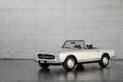
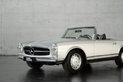
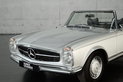
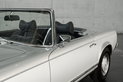
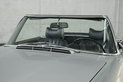
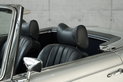
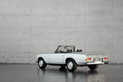
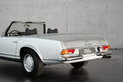
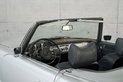
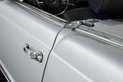
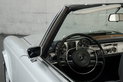
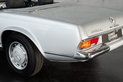
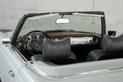
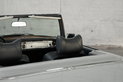
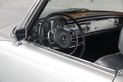
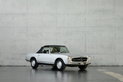
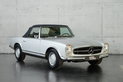
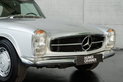
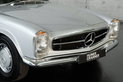
Even the colour combination exercises the sort of dignified restraint that suits a Pagoda so well. Silver Grey Metallic (180) is paired with a blue interior (135) and dark blue soft top (744). No fashionable experiment, no need to shout. The shape hardly needs it.
In recent years, the 280 SL, which had been restored in the meantime, was regularly driven between Rosenheim and Munich. Enough to ensure it never deteriorated into a mere garage ornament. Servicing and maintenance were carried out as required, keeping the Pagoda what it was always intended to be: a car to be driven.

Watch our latest YouTube videos
More Listings related to Mercedes-Benz SL Pagode


Recommended Listings


