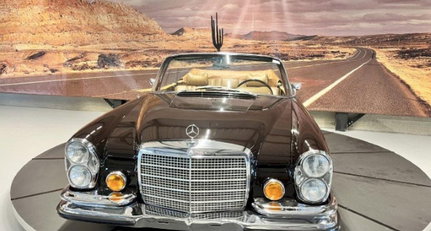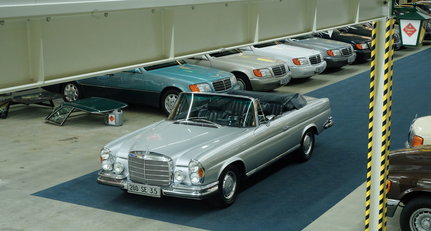
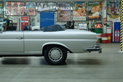
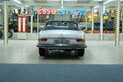
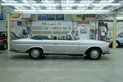
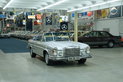
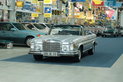
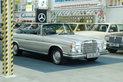
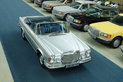
1970 Mercedes-Benz S-Class W111/112
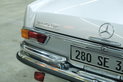
280 SE 3.5 Cabriolet-
Year of manufacture1970
-
Car typeConvertible / Roadster
-
Chassis number111.027-12-002852
-
Engine number116.980-12-002558
-
Lot number025
-
Electric windowsYes
-
Reference numberhg_55c6be64206e
-
DriveLHD
-
ConditionUsed
-
Exterior brand colourSilver Grey Metallic
-
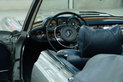
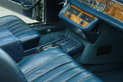
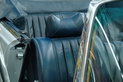
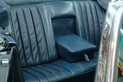
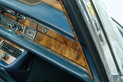
Interior colourBlue
-
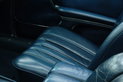
Interior brand colourLeather dark blue
-
Interior typeLeather
-
Location

-
Exterior colourSilver

Description
One of only 1,232 ever made
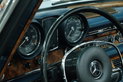
Delivered new with sliding roof and air conditioner
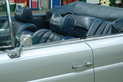
Largely preserved in unrestored condition
Family owned in Germany until 2010
Chassis no.: 111.027-12-002852
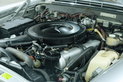
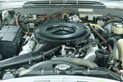
Engine no.: 116.980-12-002558
Body no.: 00576
Production no.: 72477
Paint: 180 Silver Grey Metallic
Interior: 979 Leather dark blue
Factory options:
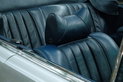
286 Luggage nets on front seat backrests
401 Single seats
420 Automatic transmission, floor shift
431 Safety belts, front
452 Two-tone horn
462 Rear fog lamp
532 Automatic antenna without radio set
541 Halogen lamp unit, crystal clear, R.H. traffic
576 Front folding armrest and headrest, left and right
586 Behr air conditioner, and electric window lifters (front and rear doors)
594 Heat-insulating glass, windshield and side window panes, Germany
616 Additional halogen fog lamp
631 First-aid box
640 Aluminium disc wheels with radial-ply tires
673 High-capacity battery
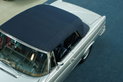
744 Folding top fabric 5010 dark blue
Provenance:
14/10/1970 – Fa. Karl Josef Otten, Mönchengladbach, DE
12/07/1993 – Alfred Aloysius Otten, Mönchengladbach, DE
26/04/2010 – Jochen Gartz, Xanten, DE
Documents:
German Fahrzeugbrief (1970)
German registration papers (2010)
Original service booklet
About the model line:
W 111
Two years after the saloon, Mercedes-Benz unveiled the Coupé and Cabriolet versions of its new flagship range at the opening of the company’s museum in Untertürkheim in February 1961. The tailfins—or, as Mercedes preferred to call them, the „parking aids“—had been pared down to little more than a subtle suggestion, while the elegant two-door models, unlike their predecessors, retained the limousine’s full wheelbase. For the first time, Mercedes offered genuine four-seaters with ample room for four adults. Their styling marked the production debut of the young French designer Paul Bracq following his arrival in Stuttgart. His creation was modern, understated and, at the same time, a masterpiece of timeless elegance. Indeed, the Coupé and Cabriolet previewed many of the styling themes later adopted by the W 108 and W 109 saloons, remaining in production throughout the entire lifespan of those model series. Building them, however, was a remarkably labour-intensive affair. Four times as many components required hand-finishing as on the four-door saloon. Luxury has always come at a price, and these elegant two-door Mercedes cost roughly twice as much as their saloon counterparts.
The range began in February 1961 with the 220 SEb, soon joined by the W 112-based 300 SE as the undisputed flagship. Costing almost 10,000 Deutsche Mark more, it came loaded with every conceivable luxury, the larger six-cylinder engine inherited from its predecessor and the sophisticated new air suspension. With 160 horsepower, later increased to 170, performance gradually caught up with the later 250 SE and eventually the 280 SE. Two years after the 300 SE had left the stage, Mercedes introduced the ultimate evolution of the series in 1969: the 280 SE 3.5, powered by an all-new V8 engine.
Its lightweight 3.5-litre aluminium V8 transformed these boulevard cruisers into genuinely rapid grand tourers. Two hundred horsepower was enough to push the speedometer beyond the magical 200 km/h mark, while the sprint to 100 km/h took less than ten seconds. The arrival of the new flagship also brought a subtle facelift. Although the saloons had already been replaced, the Coupés and Cabriolets received a wider radiator grille and redesigned bumpers. Gone was the traditional upright grille; in its place came the lower, wider grille that would define Mercedes styling for years to come, even on the standard 280 SE.
In terms of price, the 3.5 occupied exactly the same territory the 300 SE had vacated—around DM 35,000, or, put another way, well beyond the reach of most buyers. Over a production run of just three years, only 1,232 Cabriolets were built, while the Coupé found roughly 2,000 additional customers. With the 280 SE 3.5, both the model series and the era of Mercedes‘ great open four seaters came to an end. There was no direct successor, and it would be another decade before a Mercedes Coupé returned to the top of the range. Yet the class, elegance and presence of these remarkable automobiles have never truly been surpassed.

Watch our latest YouTube videos
More Listings related to Mercedes-Benz S-Class W111/112


Recommended Listings