
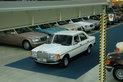
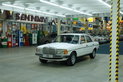
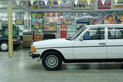
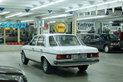






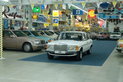
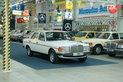

1977 Mercedes-Benz E-Class
230-
Year of manufacture1977
-
Mileage86 840 km / 53 960 mi
-
Car typeOther
-
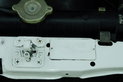
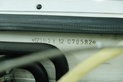
Chassis number123.023-12-078582
-
Engine number115.954-12-023723
-
Lot number009
-
Reference numberhg_0c5b441233ef
-
DriveLHD
-
ConditionUsed
-
Exterior brand colourClassic White
-
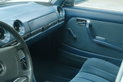
Interior colourBlue
-
Interior brand colourVelours Blue
-
Location

-
Exterior colourWhite

Description
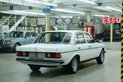
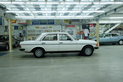
Timeless color combination
Power steering and sunroof
Many desirable options
Odometer reads only 86,840 kilometers
Chassis no.: 123.023-12-078582
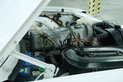
Engine no.: 115.954-12-023723
Paint: 737 Classic White
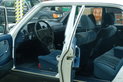
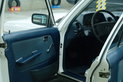
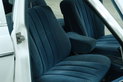
Interior: 902 Velours Blue
Factory options:
401 Single seats
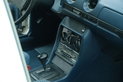
426 Mercedes-Benz power steering and automatic transmission with floor shift
466 Central locking system
514 Becker radio Europa (LM/MW/SW/USW)
Provenance:
09/12/1977 – Unknown
10/04/2009 – Unknown, NL
11/03/2022 – Metropole BV, Druten, NL
Documents:
Dutch Kentekenbewijs (2022)
About the model line:
W 123
When Mercedes-Benz unveiled the new W 123 series in January 1976, it inherited a formidable legacy. Its predecessor, the Stroke-Eight, had firmly established the brand’s reputation for building virtually indestructible automobiles. Expectations were therefore exceptionally high. The new executive model was never intended to revolutionise the segment, but rather to perfect it—and therein lay its greatest success.
Visually, the W 123 deliberately drew inspiration from the W 116 S-Class. A broad radiator grille, horizontal headlamps and clean, uncluttered lines gave it a restrained elegance that remains timeless to this day. At the same time, Mercedes-Benz placed the greatest emphasis on safety. Virtually every major safety innovation introduced with the S-Class found its way into the new model range. A collapsible steering column, a rigid passenger safety cell, carefully engineered crumple zones and a protected fuel tank made the W 123 one of the safest cars in its class.
Technically, Mercedes-Benz remained true to its philosophy. The suspension, featuring semi-trailing rear arms and double wishbones at the front, combined outstanding ride comfort with remarkable stability. The engine range extended from economical four-cylinder diesel engines to refined inline six-cylinder units. The diesels in particular quickly became synonymous with durability. Mileages of several hundred thousand kilometres were not regarded as exceptional, but almost as routine.
Its success exceeded all expectations. Buyers often had to wait many months, sometimes more than a year, for delivery of their new Mercedes- Benz. Demand became so overwhelming that lightly used examples occasionally changed hands for more than their original list price. Few model series did more to reinforce Mercedes-Benz’s reputation for engineering long-lasting, uncompromising quality.
Throughout its production run, the model family continued to grow. The saloon was joined by an elegant coupé, the spacious T-Model—the first Mercedes-Benz estate car to be built in large-scale series production—as well as extended-wheelbase versions for taxis and specialist coachbuilders. In 1980, new engines, improved rust prevention measures and numerous minor improvements arrived followed by a major model update in 1982. By the end of production in 1986, almost 2.7 million examples had been built, making the W 123 the most successful Mercedes-Benz of its era. Even today, it continues to serve faithfully in many parts of the world. While other automobiles simply grow old, the W 123 seems merely to accumulate mileage. That, more than anything else, is what made it a legend.

Watch our latest YouTube videos
More Listings related to Mercedes-Benz E-Class


Recommended Listings


