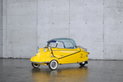
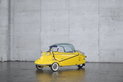
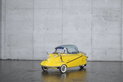
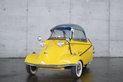
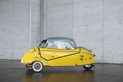
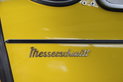
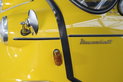
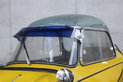
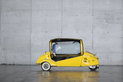
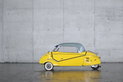
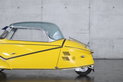
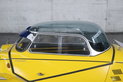
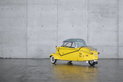
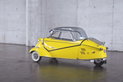
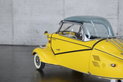
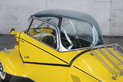
1959 FMR / Messerschmitt k 200
(Messerschmitt) KR 200-
Year of manufacture1959
-
Car typeOther
-
Chassis number69552
-
Lot number119
-
Reference numberhg_1d966746468f
-
DriveLHD
-
ConditionUsed
-
Interior colourOther
-
Location

-
Exterior colourOther

Description
Second-generation version with the larger engine
A small piece of Germany’s Wirtschaftswunder
Lovingly restored
Fritz M. Fend had worked as a young designer at Messerschmitt during the Second World War. Afterwards, his profession was temporarily obsolete: the defeated Germans were no longer allowed to build aircraft. So Fend turned his attention to something rather more down-to-earth: a three-wheeled runabout, initially powered by muscle and later by a small auxiliary engine.
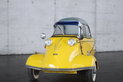
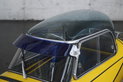
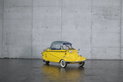
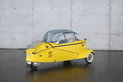
By 1951, however, his company was already on the brink. At the same time, the former Messerschmitt factory in Regensburg was looking for something worthwhile to keep it busy. The two came together and recognised an opportunity in the growing demand for motorised mobility. Within a year, the Kabinenroller was born. Beneath its Plexiglas canopy, driver and passenger sat in tandem, the controls were a cross between car and scooter, and the whole thing looked suspiciously like an aeroplane. Appropriately enough, the Messerschmitt name was revived.
In 1955 came the thoroughly revised KR 200. Its larger engine was only the beginning. The suspension, steering, roof construction, build quality and handling were worlds apart from those of its predecessor. Fend nevertheless always insisted that his Kabinenroller was more of a super-scooter than a cut-price motor car. The customers evidently understood what he meant: more KR 200s were sold in its first year alone than its predecessor had managed altogether.
It remained virtually unchanged until 1964. Neither the Roadster nor the Cabrio-Limousine could halt declining sales, nor could the FMR name now attached to the cars. Willy Messerschmitt was long since allowed to build aircraft again and had lost interest. When Sachs eventually stopped supplying the engines, that was that. Almost 52,000 Kabinenrollers had been built, more than 41,000 of them KR 200s. In the end, time and increasing prosperity had simply overtaken it.
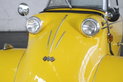
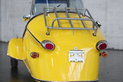
In England, home to some even more eccentric bubble cars, a collectors’ scene for these peculiar machines had developed early on. Even for those that came from the former enemy. This Kabinenroller made its way from the island to Tyrol in the late 1990s. In the photograph accompanying its Austrian papers it still presents itself in pastel yellow.
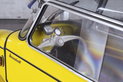
Ten years ago, its second and so far last Tyrolean owner registered the KR after treating it to a fresh coat of somewhat more intense yellow, renewing the interior and overhauling the mechanicals. One carefully sheltered decade later, it remains ready for action at any time.
A little courage may be required in today’s traffic. Any fear of going unnoticed, however, is entirely unfounded: the Kabinenroller is guaranteed to turn heads. What was once mobility for the common man is now great theatre on three wheels.