

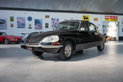
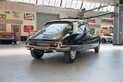
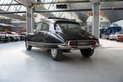
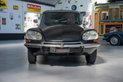
1974 Citroen DS
23 Injection Pallas-
Year of manufacture1974
-
Car typeSaloon
-
Chassis numberDSFG02FG1033
-
Lot number38
-
Reference numberunique_id_127_38
-
DriveLHD
-
ConditionOriginal Condition
-
Location

-
Exterior colourOther

Description
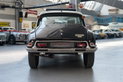
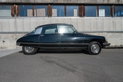
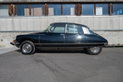
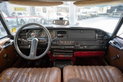
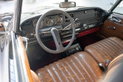
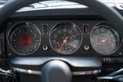
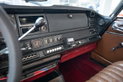
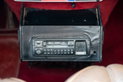
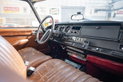
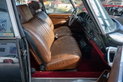
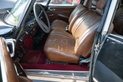
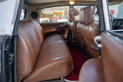
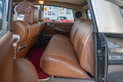
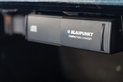
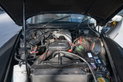
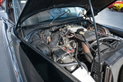
It was no real surprise when Citroën unveiled the new DS to the public at the Paris Motor Show on 6 October 1955, as the press had already reported on this ‘wonder car’ shortly beforehand. Nevertheless, events unfolded rapidly: despite some scepticism regarding the futuristic design and the engineering approaches, which some considered rather daring, Citroën received 80’000 orders during the course of the Motor Show. The ‘Déesse’ (Goddess), as the new car was often called, went against the grain in 1955 compared to vehicles featuring the so-called standard layout – engine at the front, driven wheels on a rigid rear axle. The Citroën engine drove the front wheels, and the car, which bordered on the luxury class, boasted an immense wheelbase of 312.5 cm; even the current Mercedes S-Class offers less than that in its standard specification today. The suspension was hydropneumatic, with the vehicle’s height maintained at a constant level via an oil-pressure system. The front disc brakes were in-wheel and power-assisted. Power steering was standard, as was the semi-automatic gearbox. The bodywork, with its unusually short overhangs, boasted excellent aerodynamics with a drag coefficient of 0.38. The bodywork was also designed differently to that of its competitors. A platform frame, together with a body skeleton, formed the load-bearing structure; the remaining parts – doors, bonnets, roof, mudguards, etc. – were bolted on. The windows were frameless. The rear indicators were housed in long ‘tubes’ at the top of the roof, making them more visible from a distance. Although it was ahead of the competition in many respects, Citroën never ceased to continuously improve the DS and adapt it to emerging competition. Between 1955 and 1975, power output rose from 75 to 143 hp (SAE), the engine capacity increased from 1’911 cc to 2’347 cc, and the top speed rose from 150 to almost 190 km/h. Alongside the semi-automatic four-speed gearbox, a manual version soon became available, followed by a five-speed gearbox and a torque converter automatic. In addition to the carburettor version, a fuel-injection model appeared on the price list from 1969 onwards. It was not only the technology that changed over time; the exterior design and interior fittings also underwent changes. Most striking was the introduction of the famous glazed headlights, which – on the more expensive models, controlled mechanically via the angle of the front wheels – illuminated the bend. The dashboard was revamped on several occasions and, in the process – with the transition from a ribbon-type speedometer to round dials – lost a little of its charm and non-conformity. Many features were improved over the 20 years of production and adapted to the times. Despite its long production run, the ‘Goddess’ matured like a fine wine, getting better with age. Car magazines never tired of testing the constantly modernised model range, and the question ‘Still ahead of its time?’ cropped up time and again, always receiving a positive answer. The Citroën DS 23 with electronic fuel injection offered here was – as the vehicle registration document reveals – originally supplied to Switzerland and was first registered on 15 March 1974. The early history of this ‘Goddess’ is unknown. Since 1991, this elegant saloon – featuring a 5-speed manual gearbox, leather upholstery and an optional ‘Britax’ folding roof – has been in the family ownership of the current seller. The car’s bodywork was restored in 1993 by a well-known Citroën specialist in Däniken for around CHF 15’000 and repainted from pearl white to black. This was followed in 1996 by a further restoration of the bodywork and an overhaul of the mechanical components. For a total cost of just under CHF 36’000, the engine was overhauled and fitted with the more modern fuel injection system from a Citroën CX; a contemporary ‘Frigette’ air-conditioning system was also installed, as well as a Blaupunkt Kingston radio with CD changer, which was state-of-the-art at the time. The last major service took place in 2007, and around 2016 – some 5’500 km later – the car was parked in the garage due to a lack of time. In June 2026, the car was retrieved from its long-term storage and put back on the road. The Citroën’s bodywork is in good condition, with age-related signs of wear. The original interior is in fair condition and certainly needs some attention. The engine runs and the gearbox shifts correctly – given the long period of inactivity, a major service and a general inspection should certainly be carried out before the first drive. The 46’100 km shown on the odometer is likely, as the emissions test document suggests, to correspond to an actual mileage of 146’100 km, and the most recent veteran MOT took place in May 2015.

Watch our latest YouTube videos
More Listings related to Citroen DS


Recommended Listings


