

1935 BMW 309
-
Year of manufacture1935
-
Country VATAT
-
Lot number107
-
Reference number1226
-
ConditionUsed
-
Location

-
Exterior colourOther

Description
Rare design from Spandauer Karosserie-Werke
Unique witness to BMW's early history
Extensively restored in the late 1990s
Recently undergone extensive mechanical overhaul
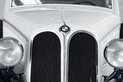
In 1934, BMW presented the 309, the successor to the 3/20 PS – and thus the first independent four-cylinder car after the Dixi era. The chassis and body of the new six-cylinder 303, which had appeared a year earlier as the first model with the iconic double kidney grille, were taken and combined with a revised four-cylinder engine. This engine produced 22 hp from 845 cc, good for a top speed of around 85 km/h.
The 309 thus offered the best of both worlds: the elegant styling and modern technology of the 303, but with lower running costs. This was particularly important for existing Dixi customers, who now had an attractive car with better driving characteristics without having to venture into the higher cost category of six-cylinder models. The 309 was available as a saloon, convertible saloon, open four-seater or two-seater convertible.
It was a success: over 6,000 units were built by 1936. But its days were numbered. Demand for the more powerful and prestigious six-cylinder models soon made the 309 look outdated. In 1936, it disappeared from the range without replacement – the last four-cylinder model before BMW concentrated entirely on six-cylinder engines until after the war.
Today, the 309 is considered a key model from the early days: it proved that BMW was capable of more than just licence production, and it marked the step towards the philosophy that still underpins the brand today – sporty elegance, even in the small class.
A letter from BMW Mobile Tradition dated 1997 confirms that this car was delivered as a saloon in September 1935. There are no further documents, it notes – and that is precisely what makes it a "rare and interesting vehicle". It is therefore also certain that its current bodywork was only created later by Spandauer Karosserie-Werke. Such conversions were by no means unusual in the 1930s and gave many cars a touch of individuality.
The convertible was built using a mixed construction method: the fenders and bonnet were made of steel, but the body above the A-pillar was made of wood covered with imitation leather. This solution saved weight and was widely used at the time. It gave the 309 a lightness without compromising its prestigious appearance.
In 1998, a previous owner subjected the BMW to a comprehensive restoration. The body, soft top, engine and brakes were overhauled or replaced, after which it was re-registered for road use. Three years ago, the car moved from Bavaria to Austria, where it was type-approved and further maintained. Most recently, it shared a garage with a 321 and underwent a fundamental mechanical overhaul by its owners, who are enthusiastic pre-war enthusiasts.
Today, the 309 is a charming representative of its era: manoeuvrable, light and luxurious at the same time, with a special body that gives it individuality and uniqueness. It is more than just a relic of early BMW history – it is a rare witness to the past that tells the story of how diverse and individual the pre-war years of the brand were.
A 309 that shines with its uniqueness – and proves that even the "little BMW" already knew how to make a big impression back then.