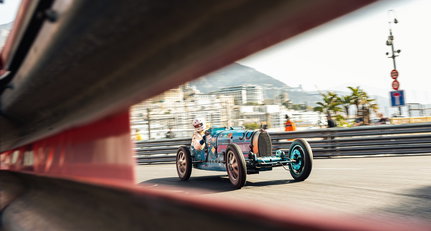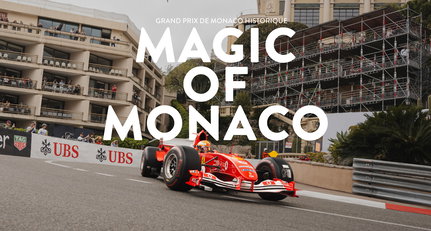


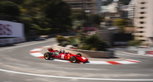
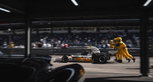
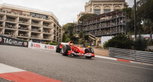
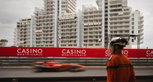

There is no race meeting quite like Monaco Historic. The calendar is full of events that claim heritage, but here — tucked between the Mediterranean and the rock of Monte Carlo, around 3.337 kilometres of streets that have witnessed the greatest drivers in history, the feeling is something altogether different. It is as though someone has lifted the needle from the record, set it back to 1967, and let it play.


The 2026 edition reminded us, once again, why this event is regarded by aficionados as the most beautiful in all of motorsport. Walking the paddock on Friday morning past a row of Lotus 49s, a brace of Maserati 250Fs and a line of immaculate Cooper Bristols, the intimacy of it all makes it feel so alive. These are not museum pieces behind glass, they are primed, fuelled and ready to race.
Among the giants who graced Monaco this year was Jacky Ickx, five-time Monaco Grand Prix finisher, Le Mans legend, and a man whose very presence in a paddock elevates the occasion. To see him walking the circuit, engaging with mechanics and owners alike, was to feel the unbroken thread between the golden era and today.


Equally as important in F1’s history is Jean Alesi, who provided the weekend's most cinematic subplot. Entrusted with a Ferrari 312, a machine of operatic fury and startling fragility, the former Ferrari Formula One driver was in his element through Casino Square and Mirabeau. Then came the tunnel. Exiting into the blinding Mediterranean light, the 312 struck a bump, a moment of contact that sent it firmly into the barrier. The car was damaged, the weekend seemingly over. What followed, however, was pure Monaco magic.
With the grace and goodwill that defines this event's paddock culture, the team relocated to the Riva boat storage facility beneath the Monaco marina, a subterranean workshop of unlikely brilliance, and set about rebuilding the car. That the Ferrari ran again at all was remarkable. That it did so in time to return to the circuit was the kind of story only Monaco writes.


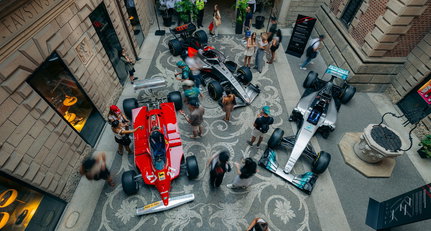
For many, the weekend's emotional high-water mark came courtesy of Ferrari's Corsa Clienti programme, which brought a procession of V10 and V8 era Formula One cars to the streets of Monte Carlo. These were not replicas or tribute machines, these were the actual race cars, the very chassis in which Michael Schumacher wrote some of the most dominant chapters in the sport's history. To hear a Ferrari V10 accelerating out of the Swimming Pool complex, the shriek bouncing off apartment blocks still draped in the red and white of the principality's flag, was to feel something close to grief for a sound that the modern world no longer produces.

It prompted an inevitable and, we would argue, entirely reasonable desire that future editions of the Monaco Historic might extend their embrace further into the 1990s and 2000s. The event has always honoured the pre-war and post-war eras with exceptional reverence. But as the cars of Schumacher, Häkkinen, and Senna's immediate successors approach their own vintage status, there is an argument that a more substantial revival of that period deserves its place in the programme.


Until then, we leave the principality as we always do: slightly sun-dazed, ears still ringing with the ghosts of engines past, and entirely certain that no other event on the calendar asks as little of the cynical mind, and as much of the romantic heart. Monaco, as ever, delivered everything it promised — and then, quietly, a little more besides.
Video by Emanuel Paliotta
Photos by Andrea Klainguti