
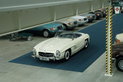
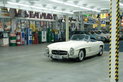
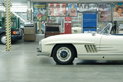
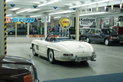
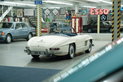
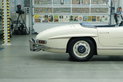
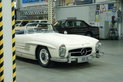
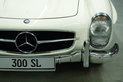
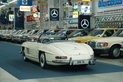
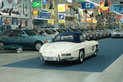
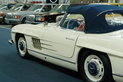

1959 Mercedes-Benz 300 SL
300 SL Roadster-
Baujahr1959
-
AutomobiltypCabriolet / Roadster
-
Chassisnummer198.042-10-002460
-
Motornummer198.980-10-002511
-
Losnummer081
-
Referenznummerhg_990cb9d187ff
-
LenkungLenkung links
-
ZustandGebraucht
-
Markenfarbe außenWhite grey
-
InnenfarbeBlau
-
Markenfarbe innenLeather blue
-
InnenausstattungLeather
-
Standort

-
AußenfarbeWeiss

Beschreibung
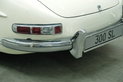
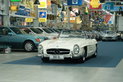
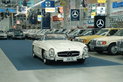
One of only 1,858 ever made
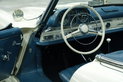
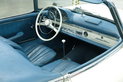
Beautifully preserved in unrestored condition
Delivered new to Belgium, only three owners
Comes with its original hardtop
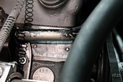
Chassis no.: 198.042-10-002460
Engine no.: 198.980-10-002511
Body no.: 198.042-10-00182
Paint: 158 White grey
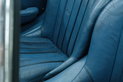
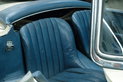
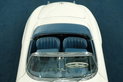
Interior: 354 Leather blue / 896 Soft-top dark blue
Frame head N°: 1065
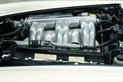
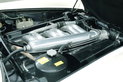
Engine note: Replacement engine (engine number marked * on card)
Gearbox N°: Not found
Rear axle N°: 9500151
Front axle left N°: 002516
Front axle right N°: 002516
Steering box N°: 003323
Factory options:
55 318/1 Hardtop white grey 158 mounted
10 278/1 5 blackwall tires 6.50x15
Anti-freeze fill
Provenance:
14/12/1959 – N.V. Elektrische Houtzagerij, Hove, BE
Then – Yddes Verbiere, Knokke Heist, BE
12/07/2011 – Jaap Braam Ruben, Maastricht, NL
Documents:
Dutch Kentekenbewijs (2022)
Belgian Inschrijvingsboekje (1959, copy)
About the model line:
W 198 II
The laurels of Mercedes-Benz’s famous one-two finiish in the race of all races, the 24 Hours of Le Mans, were still fresh when the factory team arrived at the Nürburgring in August 1952. Just in time for its home race, the tenth and final 300 SL racing car had been completed. It not only featured a shorter wheelbase than the previous nine cars, but, more importantly, it had lost its roof. Three of the team’s already successful coupés had likewise been converted into open roadsters for the Nürburgring. It did little to diminish the 300 SL’s dominance. Victory followed victory, first at the Nürburgring and later at the Carrera Panamericana.
By the end of 1952, the fate of the 300 SL appeared sealed and its story seemingly over before it had truly begun. The surviving racing cars became development mules for the engineering department. The short-wheelbase roadster was sacrificed and eventually scrapped. Two others regained their roofs and distinctive gullwing doors before embarking on promotional tours around the world. Only a single open 300 SL remained. In 1953, it received the new fuel-injected engine. By then, the decision to put the Gullwing Coupé into series production had all but been made, and this lone roadster was dispatched to the Großglockner High Alpine Road for extensive altitude and endurance testing. Once production of the 300 SL Coupé had begun, it too appeared to have fulfilled its purpose.
As the Gullwing became an instant success, calls for an open version quickly grew louder. One of the most persistent voices belonged to the very man who had already been instrumental in bringing the Coupé to market: Max Hoffman, the ambitious Austrian-born importer based in New York, once again came knocking on the door in Untertürkheim. The production 300 SL had not even celebrated its first birthday when Rudolf Uhlenhaut’s competition department, together with Head of Development Fritz Nallinger, was commissioned to create an open version.
Attention soon turned to the mothballed final open racing car, whose second life began here as the prototype for the future roadster. Little of the original racer remained beyond its spaceframe chassis—and even that underwent extensive surgery. Proper doors were now required, forcing engineers to modify and reinforce the tubular frame. By the summer of 1955, the exterior styling had also been finalised, and in early November the completed prototype stood before the company’s board of directors.
At the top of the engineering brief was an entirely new rear suspension. The twin-pivot swing axle fitted to the 300 SL Coupé had earned a formidable, even intimidating reputation when pushed to its limits. Those limits were notoriously narrow, and once the car broke away, recovering control could prove extremely difficult. The solution came in the form of a new single-pivot swing axle with a lower pivot point and a horizontal compensating spring mounted above the differential. The result was greater ride comfort and a suspension that became noticeably more composed under compression.
Throughout 1956, the prototype proved itself in extensive testing, much of it conducted on the high mountain passes of the Alps, well away from public view. Despite its increased weight, its performance remained thoroughly convincing. Yet the uncompromising 300 SL sports car had evolved into an open high-performance grand tourer. For its primary export market, the United States, this transformation was more than welcome. It was there that the first photograph of the car appeared, famously captioned „The Secret SLS“, showing the prototype on the Stelvio Pass. By then, the decision to put the Roadster into production had been made, and in late October the prototype was finally unveiled to the public.
The production cars would once again bear the name 300 SL, while the designation SLS remained reserved for two lightweight open competition cars, intended as little more than an experiment to assess the Roadster’s racing potential. The experiment proved successful, but it went no further. In March 1957, at the Geneva Motor Show, the new 300 SL Roadster celebrated its glamorous world premiere. Before the spring was over, it had replaced the Gullwing Coupé, whose production came to an end.
The footsteps it was expected to follow belonged to nothing less than a legend. The 300 SL Roadster continued the Gullwing’s story with remarkable success. By early 1963, 1,858 examples had been built, most of them once again destined for the other side of the Atlantic. Throughout its six-year production run, the Roadster was continually refined. A removable hardtop became available in 1958 for year-round usability, four-wheel disc brakes replaced drums in 1961, and in 1962 the engine received an aluminium cylinder block.
Then, in March 1963, the glorious story came to an end. There would be no true successor. The new 230 SL simply could not fill the void. Even Bruno Sacco would later admit that the W113 represented a step in the wrong direction—albeit a remarkably successful one. There would never again be another automobile quite like the 300 SL

Watch our latest YouTube videos
Verwandte Anzeigen zu Mercedes-Benz 300 SL


Empfohlene Angebote


