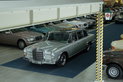
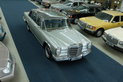
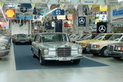
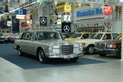
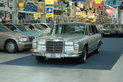
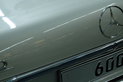
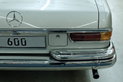
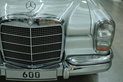
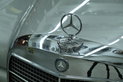
1969 Mercedes-Benz 600
600-
Baujahr1969
-
AutomobiltypSonstige
-
Chassisnummer100.012-12-001271
-
Motornummer100.980-12-001316
-
Losnummer026
-
SchiebedachJa
-
Referenznummerhg_c8bb60cd42eb
-
LenkungLenkung links
-
ZustandGebraucht
-
Markenfarbe außenSilver Grey Metallic
-
InnenfarbeGrau
-
Markenfarbe innenVelours grey
-
Standort

-
AußenfarbeSilber
Beschreibung
One of 2,190 SWB limousines
Rare factory two-tone paint
Delivered new to Monaco
Owned by Lorinser for decades
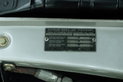
Chassis no.: 100.012-12-001271
Engine no.: 100.980-12-001316
Body no.: 80191
Production no.: 900051
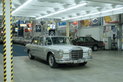
Paint: 180 (UT) Silver Grey Metallic / 172 (OT) Anthracite Grey Metallic
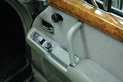
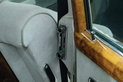
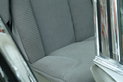
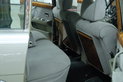
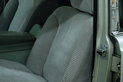
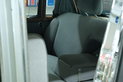
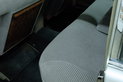
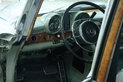
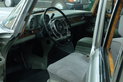
Interior: 741 Velours grey
Factory options:
282 6-piece luggage set
306 Air conditioner
401 Single seats
411 Mechanical and hydraulic sliding roof
516 Becker radio Grand Prix LM/MW/SW/USW
601 Oil for rear axle with limited-slip differential, in canisters and containers
629 Version for France
665 Mode of packing, VE I
KW 05981/01 One folding table on the backrest of each of the front seats on the left and right.
KW 09411/03 Rear centre arm rest used as a cosmetics box (empty)
Provenance:
27/05/1969 – Unknown, MC
27/06/1976 – Société Comptoir Général des Viandes, Nizza, FR
15/09/1981 – Fa. Lorinser, Waiblingen, DE
20/08/2024 – Hannes Daxecker, Feldkirchen an der Donau, AT
Documents:
French certificat d'immatriculation (1976)
German Fahrzeugbrief (1981)
German registration papers (2009)
Austrian Einzelgenehmigung (2023)
About the model line:
W 100
“Have you got anything bigger?”
Konrad Adenauer is said to have asked when he was presented with the new 300 SE as his official state car. As it happened, they did – although it was not quite finished yet. Even while Adenauer was still using the predecessor to the 300 SE – rather, being chauffeured in it, the very model that came to bear his name – Mercedes-Benz had already handed development chief Fritz Nallinger a blank cheque. A mandate to make possible anything that contemporary engineering could conceivably achieve. Stuttgart was to build a new »Großer Mercedes« that, with characteristic understatement, aspired to nothing less than becoming the finest automobile in the world.
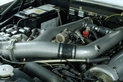
Nallinger spared no effort. Air suspension, a hydraulic comfort system, seats, windows and the sliding roof operating almost silently and seemingly by magic, power steering, automatic transmission, air conditioning, electrically controlled heating and ventilation – features that bordered on science fiction in their day. For a brief moment, engineers even considered a twelve-cylinder engine, only to conclude that it offered few tangible advantages over a V8. That the displacement of this V8 was ultimately increased from the originally planned 5.4 to 6.3 litres may well be regarded as a pointed challenge to the British automotive aristocracy of Rolls-Royce.
Its dimensions were immense, its mere presence commanded respect. This technological masterpiece was packaged within more than five and a half metres of automobile, almost two metres wide. And that was the standard, “short-wheelbase” version. For the 600 was also available as the Pullman, stretching to 6.24 metres and offered with either four or six doors. And because it was conceived as much as a vehicle of state as one of luxury, there was also the Landaulet, with its open rear compartment. After all, one was meant to see who occupied the seat in the back.
At its home debut at the Frankfurt Motor Show in September 1963, Mercedes-Benz unveiled this rolling superlative to an astonished public. The motoring press lavished praise upon a car that remained hopelessly beyond the reach of ordinary mortals. With 250 horsepower and twice as many pound-feet of torque, the 600 exceeded 200 km/h, while more than one road test credited it with a surprising touch of sports car character. The price tag read an eye-watering 56,500 Deutsche Mark – less would buy a detached family home. But no member of the 600’s clientele was likely to reside in such mundane accommodation. Its owners formed a glittering circle comprising the who’s who of the jet set and the charts, alongside potentates of every description, monarchs, presidents, revolutionaries, dictators, and even the Vicar of Christ.
The Pope owned just one, as did the King himself, Elvis Presley, along with John Lennon, Udo Jürgens, David Bowie, Elizabeth Taylor, Gunter Sachs and Pablo Escobar. Certain Arab royal garages are said to have housed well over a hundred examples. “President” Mobutu made do with 23, closely followed by the Shah with 21. Mao owned eleven, while Gaddafi’s tally remains something of a mystery. Others were more restrained: Leonid Brezhnev, Tito, the Kim family and Saddam Hussein each found a single 600 entirely sufficient.
Mercedes-Benz had planned to build 3,000 examples a year. Yet even the boundless appetite for prestige among a number of small Mediterranean states proved nowhere near sufficient – and there simply were not enough such rulers to sustain those ambitions. By June 1981, total production had reached only 2,677 cars: 2,190 short-wheelbase saloons, 304 four-door Pullmans, 124 six-door Pullmans, 47 four-door Landaulets, 12 six-door Landaulets, and two coupés that officially never existed. Sales had already begun to decline during the 1970s. New emissions regulations – which effectively barred the model from the American market – and, improbable though it may seem, the oil crisis took their toll on the mighty 600. By 1979 it had quietly disappeared from the sales brochures, at a time when annual production had long since fallen below fifty cars.
Mercedes-Benz lost money on every single 600 it built. Production was exceptionally labour-intensive and expensive, much of the car being crafted by hand. Thanks to the often extravagant wishes of its clientele, scarcely any two examples were alike, hardly a recipe for keeping costs under control. Yet throughout its production life, the company continuously refined and modernised the car wherever necessary. For Mercedes-Benz, the 600 was never about profit – it was about prestige. The competition had been relegated to the sidelines; from that moment on, the very embodiment of luxury and technological progress wore a three-pointed star. No advertising campaign in the world could ever have bought such an image.
To this day, the Mercedes-Benz 600 remains one of the great milestones of automotive history. It became the benchmark against which every state limousine that followed would be measured. Many have tried. None has surpassed it.

Watch our latest YouTube videos
Verwandte Anzeigen zu Mercedes-Benz 600


Empfohlene Angebote


