
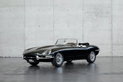
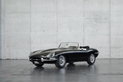
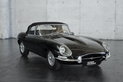

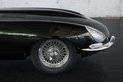
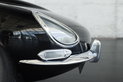
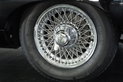
1962 Jaguar E-Type SI
E-Type 3.8 Litre Open Two Seater-
Baujahr1962
-
AutomobiltypSonstige
-
Chassisnummer875876
-
Losnummer193
-
Referenznummerhg_cd6e1ac56018
-
LenkungLenkung links
-
ZustandGebraucht
-
InnenfarbeSonstige
-
Standort

-
AußenfarbeSonstige

Beschreibung
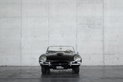
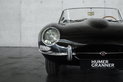
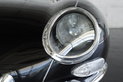
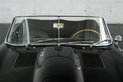
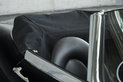
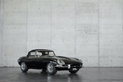
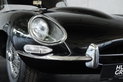
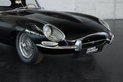
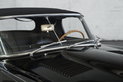
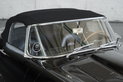
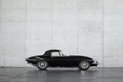
Finished entirely in black from new
The 792nd left-hand-drive Flat-Floor Roadster
Extensively restored some years ago
Impressive presence
At the end of 1956, Jaguar owner William Lyons announced the withdrawal of the works racing team, suddenly leaving an Experimental Car in the development department, intended as a successor to the D-Type, facing an uncertain future. Lyons was a businessman and had seen other manufacturers overstretch themselves with motor racing.
Without the pressure of having to put a racing car on the grid for the following season, Malcolm Sayer began developing the experimental car in the direction of a road-going sports car. By mid-May 1957, chief engineer William Heynes was already putting the E1A (Experimental Type 1 Aluminium) through its first test runs before test driver Norman Dewis took it to the MIRA proving ground.
Before E1A was scrapped at the end of 1958, a mould was taken from its body and modified for a seven-foot wheelbase. Within a week, a rolling model with a riveted-together body had become a running car. At around the same time, a chassis numbered 850001 was created, and by June 1959 the first proper E-Type prototype was complete, with Norman Dewis putting it through its paces at MIRA. By July 1960, four prototypes had been built, two Open Two-Seaters and two Fixed Head Coupés. The former were entirely the work of Malcolm Sayer, while the full-size styling model for the closed E-Type had been built by Bob Blake and subsequently translated onto paper by Sayer.
By February 1961, with the prototypes already scrapped, three E-Types in their final form were ready: one Roadster and two Coupés. While the Roadster was lent to the press, the two Coupés were sent to the Geneva Motor Show. On 15 March 1961, William Lyons presented the E-Type to an astonished public. The sensation caused by the two Jaguars was so great that Norman Dewis was immediately ordered to drive the press Roadster to Geneva. A month later, the E-Types caused much the same sensation in New York. Six cars were sold within 30 minutes, and 2,000 orders were taken during the show.
Compared with its rivals from Ferrari or Mercedes, the E-Type was not only faster but considerably less expensive – and it simply looked sensational. The 3.8-litre engine, already familiar from the most powerful XK, produced 265 hp and propelled the E-Type to an incredible 240 km/h. Thanks to independent suspension, it also remained reassuringly composed at such speeds.
William Lyons quickly realised what Jaguar had created, but back home in England the company was struggling with production capacity that first had to be expanded. At the same time, Jaguar was already beginning to cure the E-Type of its first little teething troubles. Among the earliest improvements were internal catches for that seemingly endless bonnet. New footwells for driver and passenger soon followed, making the seating position more comfortable.
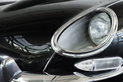
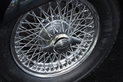
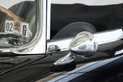
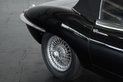
This Jaguar E-Type was delivered to Jaguar Cars, New York, on 27 October 1961. According to its Jaguar Heritage Trust Certificate, the Roadster had been built on 12 October 1961 entirely in black: black paintwork, black leather and a black hood. According to its chassis number, the certificate identifies this car as the 762nd left-hand-drive Roadster built. As a very early example, this E-Type is a Flat-Floor model and also features the sought-after bonnet with “Welded Louvres”.
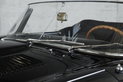
In August 1991, the Jaguar was auctioned by Rick Cole in Monterey. The catalogue description stated: “restoration on rustless Colorado car”. A photographic album documenting the restoration shows this Jaguar being rebuilt from a bare body shell, with freshly overhauled mechanical components and a new interior. The amount of work involved is impressive. An insurance policy dated 12 August 1991 records a mileage of 88,582 miles. The low mileage and colour combination were presumably among the reasons why such an extensive restoration was considered worthwhile.
As the 1993 title once again records the same mileage, it can be assumed that the owner in Pennsylvania did not drive his splendid Jaguar. The Roadster changed hands again in 2014 before being sold to Austria at the end of 2020. At the time, the consignor had been looking for an early E-Type with all the right ingredients when he came across this Open Two-Seater at a dealer in New York.
Since then, he has had a major service carried out and fitted new tyres. The Jaguar has covered only around 16,000 miles since its restoration. It remains very easy indeed to understand the enthusiasm of its previous owners.
That the consignor remains thoroughly convinced by his Jaguar is demonstrated by his offer to have either Austrian or German registration documents issued immediately after the auction, together with a fresh inspection, so that the buyer receives the car ready to register, regardless of which side of the border he lives on. A fresh inspection is half the battle; the real winner will be the fortunate new owner.

Watch our latest YouTube videos
Verwandte Anzeigen zu Jaguar E-Type SI


Empfohlene Angebote


