
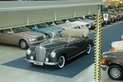
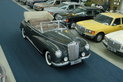
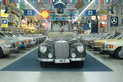
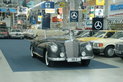
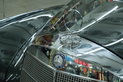

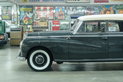
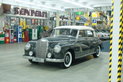
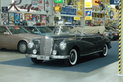
1952 Mercedes-Benz Adenauer
300b Cabriolet D-
Baujahr1952
-
AutomobiltypCabriolet / Roadster
-
Chassisnummer186.014 01230/52
-
Motornummer186.920 01256/52
-
Losnummer027
-
Referenznummerhg_76193587ab7d
-
LenkungLenkung links
-
ZustandGebraucht
-
Markenfarbe außenGraphite Grey*
-
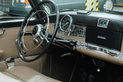
InnenfarbeBeige
-
Markenfarbe innenTan
-
Standort

-
AußenfarbeGrau
Beschreibung
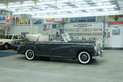
One of only 136 ever made
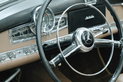
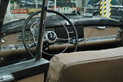
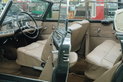
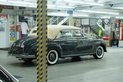
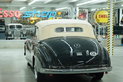
Largely preserved in unrestored condtion
Delivered new to Switzerland
Rare color combination
Chassis no.: 186.014 01230/52
Engine no.: 186.920 01256/52
Paint: 190 Graphite Grey*
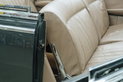
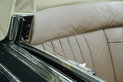
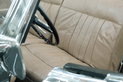
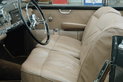
Interior: Tan
Provenance:
1953 – Unbekannt, Unbekannt, CH
09/02/2009 – Unbekannt, Unbekannt, CH
22/02/2021 – Clecito, Ivry-sur-Seine, FR
02/04/2022 – Metropole Classic Cars B.V., Druten, NL
Documents:
Dutch Kentekenbewijs (2022)
French customs paper (2021)
About the model line:
W 186
By 1946, Mercedes-Benz production had resumed in Sindelfingen and Untertürkheim. Yet even in its luxurious „S“ guise, the 170 was only a pale reflection of what the marque had represented before the war. As the first gentle breeze of Germany’s economic miracle began to blow, passenger-car production gradually gathered momentum once again. Prosperity was returning to the Old World. What was missing, however, was an automobile worthy of displaying it.
That changed in the spring of 1951. At the Frankfurt Motor Show, Mercedes-Benz unveiled not one, but two new six-cylinder models: the 220 for the executive class and the 300 for the very pinnacle of the range. The latter was far more than a statement of intent—it was a declaration. Three litres of displacement, six cylinders, 115 horsepower and a top speed of 160 km/h made it the fastest production car built in Germany. Even Britain’s aristocracy of motoring suddenly found itself looking over its shoulder. Mercedes-Benz had shown the world that it was once again capable of building automobiles of genuine international stature. The Type 300 became the company’s rolling flagship.
One German Chancellor made the 300 his automobile of choice, not least because of the generous headroom—so the legend goes. To him the car owes the nickname it still carries today: the „Adenauer“. No fewer than six examples accompanied the passionate hat wearer throughout his years in office: open and closed, short and long, even as a Landaulet combining the best of both worlds, each individually crafted in Stuttgart.
Despite its inevitably modest sales volume, Mercedes-Benz continued to refine the 300 throughout its life. The original model gave way to the 300b in 1954. New carburettors and a higher compression ratio liberated an additional ten horsepower, while larger brakes—now assisted by a brake servo for the first time—kept performance firmly under control. In 1955, a redesigned rear axle and a larger rear window transformed it into the 300c, which also became available with automatic transmission. Finally, in 1957, came the 300d: larger, more powerful and equipped with fuel injection. The B-pillar disappeared as well, a styling cue very much in keeping with American tastes.
Alongside the saloon, Mercedes-Benz also offered the Cabriolet D. Even before the war, that designation had been reserved for four-door convertibles of the highest order, automobiles created for those who wished to make an entrance. At almost DM 25,000, its price ensured an equally exclusive clientele. Just 125 examples of the 300b Cabriolet D were built. It became the last of its kind. Since Kennedy, statesmen have generally preferred to appear in cars that are only half open—or entirely closed. When „the Old Man“ retired from office, so too did his beloved Mercedes. Today, both have long since secured their place in history.

Watch our latest YouTube videos
Verwandte Anzeigen zu Mercedes-Benz Adenauer


Empfohlene Angebote


