
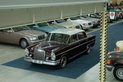
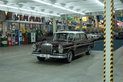
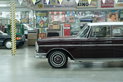
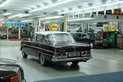
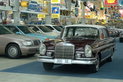
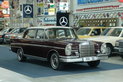
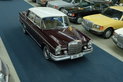
1965 Mercedes-Benz S-Class Heckflosse
300 SE lang-
Baujahr1965
-
AutomobiltypSonstige
-
Chassisnummer112.015-10-008711
-
Motornummer189.986-10-000629
-
Losnummer021
-
SchiebedachJa
-
Referenznummerhg_2fdc495946f4
-
LenkungLenkung links
-
ZustandGebraucht
-
Markenfarbe außenBurgundy Red
-
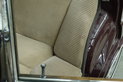
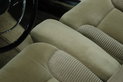
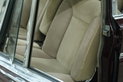
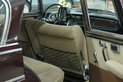
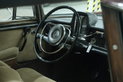
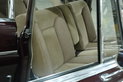
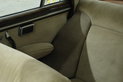
InnenfarbeBeige
-
Markenfarbe innenVelours Parchment
-
Standort

-
AußenfarbeRot
Beschreibung
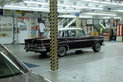
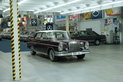
The third of only 1,546 LWB limousines
Delivered new to the Asbach distillery
Rare special order color
Chassis no.: 112.015-10-008711
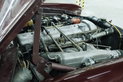
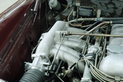
Engine no.: 189.986-10-000629
Body no.: 00297
Production no.: 00003
Paint: 573 Burgundy Red
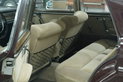
Interior: 705 Velours Parchment
Factory options:
210 Rear axle ratio 1:3.75
401 Single seats
411 Steel sliding roof
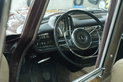
425 Manual transmission, steering column shift
431 Safety belts, front
452 Two-tone horn
516 Becker radio Grand Prix LM/MW/SW/USW
531 Automatic antenna
540 Seat adapter, between the front seats
641 White-wall tires
877 Reading lamp in the rear
Provenance:
29/07/1965 – Weinbrennerei Asbach Uralt, Ruedesheim, DE
Hans-Georg Asbach, Ruedesheim, DE
Documents:
German registration papers
About the model line:
W 112
The hardships of the post-war years were finally over by the late 1950s. Germany’s Wirtschaftswunder was in full swing, and those who had made it wanted the world to know. Mercedes-Benz, too, needed something new—an entirely new generation of automobiles that would embody the country’s newfound confidence and capture the spirit of the age.
In 1959, the new upper-class Mercedes made its debut, internally designated W 111. Inspired by contemporary American styling, two modest tailfins rose from the rear, far more restrained than those adorning Detroit’s chrome-laden land yachts, yet distinctive enough to give Karl Wilfert’s design an unmistakable identity. The public soon coined its own name:
Heckflosse—the „Fintail.“ Mercedes, however, preferred to call them „parking aids,“ as they were intended to make manoeuvring easier. Far more important, however, was what lay beneath the sheet metal. Safety engineer Béla Barényi had fundamentally reimagined the automobile. For the first time, a production car featured a rigid passenger cell surrounded by defined crumple zones. The steering column, door locks, dashboard—virtually every component was scrutinised for its behaviour in a collision. Today this is taken for granted; at the time, it was nothing short of revolutionary. Safety was no longer a matter of chance but an integral part of the car’s design. Technically, too, the new model range was at the top of its game.
Independent suspension all round, disc brakes—initially at the front, later on all four wheels—powerful fuel-injected engines and a level of build quality that further cemented Mercedes-Benz’s reputation. The W 111 was no sports car, nor did it aspire to be one. Its true talent lay in effortless long- distance travel. Cruising the new Autobahn for hours at 160 km/h, without haste and without ever feeling as though the car was being pushed—that was its natural habitat.
Success came quickly. Few Mercedes models before it had captured the spirit of their era so perfectly. Yet as the venerable 300 series approached the end of its career, the company once again lacked a true flagship. That void was filled in April 1961 by the W 112. At first glance, it appeared to be little more than a W 111 fitted with the engine from the old 300. Nothing could have been further from the truth. Beneath its familiar bodywork lay an entirely new technological masterpiece. Mercedes-Benz had developed a sophisticated air suspension system designed to maintain a constant ride height while delivering exceptional comfort. From the outset, the 300 SE also featured four-wheel disc brakes, a new four-speed automatic transmission, power steering, a limited-slip differential and a rear-axle compensating spring that prevented excessive wheel rebound. Lavish amounts of chrome further distinguished the W 112, making the already elegant W 111 seem almost understated by comparison.
Less than a year after the saloon came the Coupé and Cabriolet. The recipe remained unchanged. The bodies were derived from the W 111, while the mechanicals—including the air suspension—came from the 300 SE saloon. As with the saloon itself, demand fell short of expectations. At the end of 1962, Mercedes introduced a hand-built limousine stretched by 10 centimetres, an attempt to lend the model range a little more exclusivity while bridging the gap until the W 100 was ready for production. Konrad Adenauer was not alone in finding the W 112 a little too ordinary. For the time being, he remained faithful to its predecessor, the car that had become popularly known by his own name.
The modest production figures reflected the compromise that had defined the W 112 from the very beginning: it was too expensive, yet not quite exclusive enough. Mercedes had created a niche that scarcely existed. With the arrival of the mighty 600 in 1964, industrial magnates, film stars, presidents and potentates once again had the state limousine they truly desired.
In 1965, the W 108 and W 109 succeeded the W 111 and W 112 saloons. The 300 SE Coupé and Cabriolet were granted another two years of production, while their W 111 siblings continued for even longer. They had always looked more modern, more elegant and, above all, more timeless. Little wonder they continued to sell remarkably well

Watch our latest YouTube videos
Verwandte Anzeigen zu Mercedes-Benz S-Class Heckflosse


Empfohlene Angebote


