
1974 VW Käfer
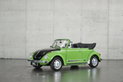
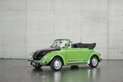
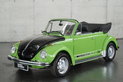
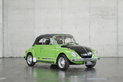
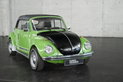
Käfer 1303 LS Cabriolet World Cup 74-
Baujahr1974
-
AutomobiltypCabriolet / Roadster
-
Chassisnummer154 2 727 245
-
Losnummer128
-
Referenznummerhg_8a29ed4417f3
-
LenkungLenkung links
-
ZustandGebraucht
-
InnenfarbeSonstige
-
Standort

-
AußenfarbeSonstige

Beschreibung
One of only 25 Cabriolets built
Presented by Volkswagen to the 1974 football World Champions
One of just 13 surviving Cabriolets currently known
Extensively restored by its current owners
The rarest special edition in Beetle history
A piece of German sporting history
All of Germany was already gripped by World Cup fever when, on 6 May 1974, five weeks before the opening match, the tournament on home soil suddenly became a secondary concern. Chancellor Willy Brandt resigned in the wake of an espionage scandal. One of his closest aides had been exposed as an East German spy.
On 16 May, the Bundestag elected Helmut Schmidt as Brandt’s successor. From 13 June, football was being played across West Germany and the affair of state was almost forgotten again. On 7 July, the hosts beat the Netherlands 2–1 to become football World Champions for the second time, and half the country fell into each other’s arms.
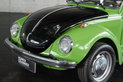
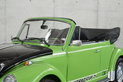
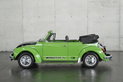
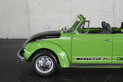
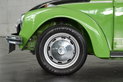
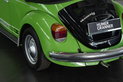
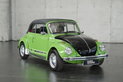
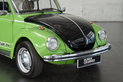
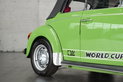
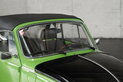
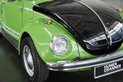
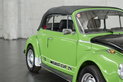
Volkswagen took the World Cup as an opportunity to create a special edition in which restraint was about as important as offside at a throw-in. Even before the final, the World Cup ’74 special series had been created on the basis of the 1303. A total of 300 saloons were built, painted in Cliff Green, Rally Yellow, Luminous Orange or Senegal Red. The bonnet and engine lid were finished in contrasting black, while World Cup lettering and the tournament emblem adorned the flanks. Even the gearknob joined in, taking the form of a football. Anyone hoping to drive unnoticed to the bakery in 1974 would have been better advised to order a different Beetle.
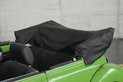
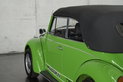
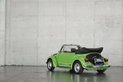
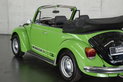
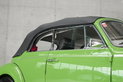
The story, however, had a second chapter. Karmann built a further 25 World Cup ’74 cars especially for the occasion – this time as 1303 Cabriolets and exclusively in Cliff Green. They too wore black lids and the conspicuous World Cup decoration. These cars could not be bought. They had been promised to the players and members of the coaching and support staff of the winning team as a reward for taking the title. Volkswagen simply had its own way of saying congratulations.
One of the Cabriolets was already on display at the victory celebrations in Munich’s Hilton Hotel. Uli Hoeneß is said to have collected his example from MAHAG in Munich just two days after the final. What would have become of them had Germany not won the title? VW maintained that whichever nation won would have received them. After all, the cars had already been built.
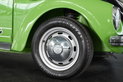
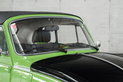
Technically, the Cabriolet remained pleasingly down to earth. The 1303 was already the most modern Beetle of its day, with its curved windscreen and MacPherson-strut front suspension. Appropriate propulsion for the World Champion Cabriolet came from the familiar 1.6-litre flat-four producing 50 hp. All 25 shared the same specification: an ‘Emden’ radio (097), heated rear window (102) and three-point automatic front seat belts (184). The gearknob was shaped like a football. Otherwise, special edition 724 was finished entirely to LS specification.
Only 13 of the 25 Cabriolets are known today. Among them are those presented to Uli Hoeneß, Jürgen Grabowski, Jupp Heynckes, Jupp Derwall, Horst-Dieter Höttges, Dieter Herzog, Helmut Schön, ‘Bomber’ Gerd Müller, Georg Schwarzenbeck, Bernd Hölzenbein and ‘Kaiser Franz’ Beckenbauer. In the case of two cars, it is not known whose trophies they once were.
This is one of those two.
It came to Austria in 2014. Two owners later, the Cabriolet was bought by a father-and-son team. Repainted, missing its football gearknob and clearly marked by life, there was little to suggest that it was one of the 25 World Champion Cabriolets. The surprise was therefore all the greater when the certificate arrived from Wolfsburg. At a stroke, the standards required had multiplied – and so had the amount of work. Without the necessary effort, after all, the World Champions might just as easily have been Holland.
It took more than an entire World Cup cycle before the World Cup ’74 Cabriolet was finished. Two things are still missing: the gearknob and the knowledge of which World Champion was its first owner. So the rarest of all Beetles still has two mysteries left to solve. And the latter will surely allow this wonderful piece of sporting history to spring one more surprise.

Watch our latest YouTube videos
Verwandte Anzeigen zu VW Käfer




Empfohlene Angebote


