
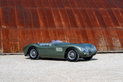
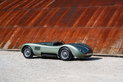
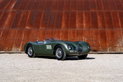
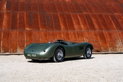


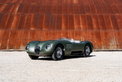


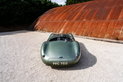
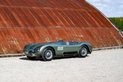
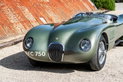
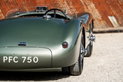
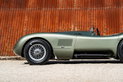
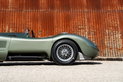
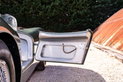
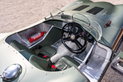
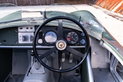
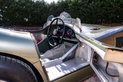
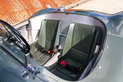
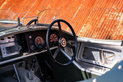
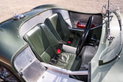
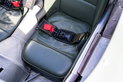
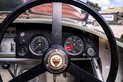
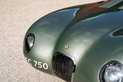
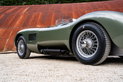
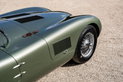
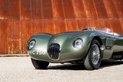

1950 Jaguar C-Type
Toolroom Copy (FIA HTP)-
Baujahr1950
-
AutomobiltypCabriolet / Roadster
-
RennwagenJa
-
FIA-PapiereJa
-
LenkungLenkung rechts
-
ZustandRestauriert
-
InnenfarbeGrün
-
InnenausstattungLeather
-
Anzahl der Türen1
-
Zahl der Sitze2
-
Standort

-
AußenfarbeGrün
-
GetriebeManuell
-
Antrieb2wd
-
KraftstoffPetrol
Beschreibung
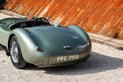
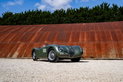
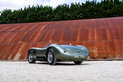
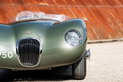
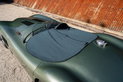
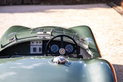
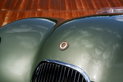
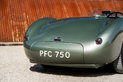
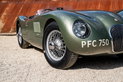
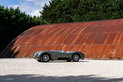
The Jaguar C-Type is one of the most evocative racing cars ever built — winner of Le Mans in 1951 and 1953, and with only 53 examples made at Browns Lane, long since beyond reach for most collectors. The market for high-quality recreations built on genuine Jaguar identities has therefore developed its own rigorous hierarchy of builders, methods, and provenance. This example sits firmly at the top of that hierarchy.
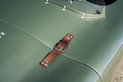
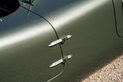
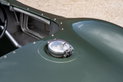
This car was built by Andy Thomas, formerly of Lynx — the celebrated Sussex-based constructor whose C-Type and D-Type recreations set the benchmark for the genre — who later formed Classic Chassis Services. One of the most respected engineers working in this highly specialised field, Thomas’s approach to C-Type recreation was meticulous from the outset. His build method — described in a detailed feature in Jaguar World Monthly, included in the history file — involved hand-fabricating the first chassis before commissioning full engineering drawings for subsequent CNC production. Crucially, Thomas used PUR 120 as his direct physical reference throughout: the well-documented original C-Type owned by his friend, the late Aubrey Finburgh. Where lesser recreations work from photographs or general dimensions, Thomas had access to the authentic article for measurement, comparison, and cross-checking at every stage. The car is registered as a 1950s Jaguar on an original period identity — the accepted and proper basis for a C-Type recreation of this type.
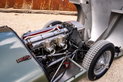
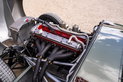
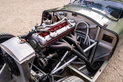
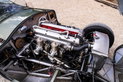
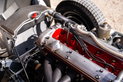
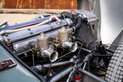
The engine is an XK120 unit correctly modified to C-Type specification — sand-cast SU carburettors, long-fan pulley dynamo, C-Type sump with the correct offset dipstick — precisely as described in the contemporary press coverage of the build.
Following some competition use — including a race at Magny-Cours — Christian Tedeschi of Auto Klassiker in Poliez-Pittet, Switzerland, undertook a comprehensive inspection in 2016 and determined that a full engine rebuild was required. The work that followed was extensive: the block was chemically and ultrasonically cleaned, the crankshaft reground, all valves and seats attended to, valve stem seals fitted, camshafts inspected and cam followers replaced, the block face skimmed, and main and big-end bearings replaced throughout. Every moving component was individually measured, adjusted, and where necessary renewed — a ground-up rebuild rather than a service. On completion, the engine was dyno-tested, recording a verified output of 265bhp — entirely appropriate for period C-Type specification and confirmed on the Dynojet printout in the history file. Beyond the engine, the front and rear suspension were comprehensively refreshed: worn bushes, ball joints, and fasteners replaced throughout; a seized propshaft universal joint rebuilt and balanced; a corroded radiator replaced with a new unit; the electrical system converted to accept an electronic trip master; and the rear brakes and limited-slip differential attended to. The car emerged from this programme in fundamentally stronger mechanical condition.
Most recently, the car has been in the hands of Hi-Tech Motorsport, the Kidderminster-based motorsport preparation specialists, who carried out a thorough mechanical service: all four brake assemblies stripped and rebuilt, wheel bearings cleaned and repacked, brake shoes renewed, the system bled and pressure-tested, all fluids changed, a damaged core plug replaced, and a new battery and spark plugs fitted. Ashton Keynes Vintage Restorations attended to the exhaust system — removing, repainting, and refitting with new gaskets and clamps — with the engine run up to temperature to confirm all clear. The history file includes the full Auto Klassiker inspection report, all invoices, and the Dynojet power graph, alongside the Jaguar World Monthly feature article on the original build by Andy Thomas.
The car will be supplied with fresh FIA HTP papers, currently in progress, confirming eligibility for historic motorsport events and providing independent technical verification of the car’s specification. With those papers in place, the car will be eligible to apply for each of the following:
Spa Six Hours
Le Mans Classic (1949–1956 Heritage class)
HSCC Jaguar Classic Challenge
Modena Cento Ore
Masters Historic Racing — Guards Trophy

Watch our latest YouTube videos
Verwandte Anzeigen zu Jaguar C-Type


Empfohlene Angebote


