

































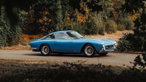
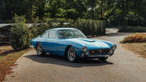
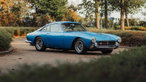
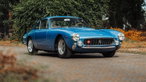
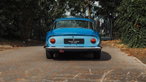
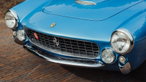


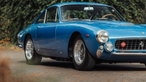
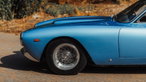


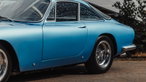

1964 Ferrari 250
-
Baujahr1964
-
AutomobiltypSonstige
-
LosnummerZT26Lot_136
-
Referenznummer6217
-
LenkungLenkung links
-
ZustandGebraucht
-
Markenfarbe außenother
-
Standort

-
AußenfarbeSonstige
Beschreibung
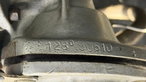
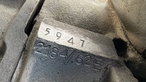
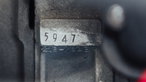
Chassis No. 5947 GT
Engine No. 5947 (Internal No. 2184/62 E)
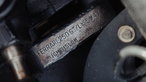
Transmission No. 347
Differential No. 351
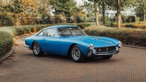
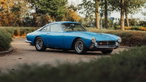
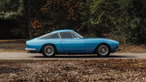
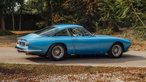
Few numbers have the resonance of "250" in automotive history. It may well be Ferrari's signature number. It evokes the marque's golden age, a period when Ferrari produced some of the most evocative and desirable automobiles ever to emerge from Maranello. The 250 MM, 250 Europa GT, 250 GTO, and countless other variants have become icons in their own right. Choosing a favorite among them is no easy task, but if only one could remain, it must surely be the Ferrari 250 GT Berlinetta Lusso. As the final road-going model of the celebrated 250 lineage, it marks the culmination of Ferrari's development of the series, bringing together its many advances in an exceptional balance of performance, sophistication, and elegance.
Unveiled at the 1962 Paris Motor Show, the Lusso-Italian for "luxury"-was conceived to bridge the gap between the sporting 250 GT Berlinetta SWB and the more versatile 250 GTE 2+2. Its production was remarkably short-lived, spanning just 18 months, during which only 350 examples were completed.
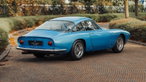
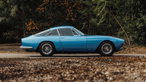
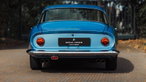
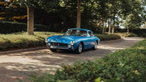
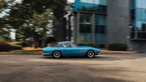
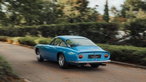
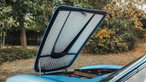
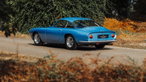
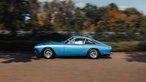
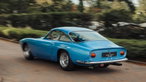
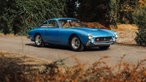
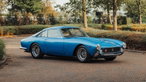
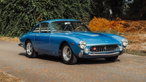
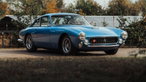
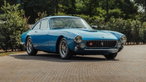
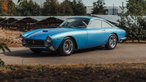
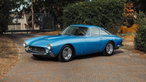
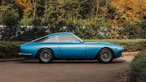
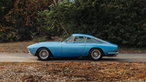
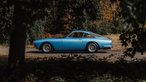
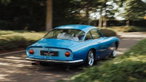
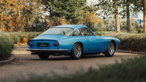
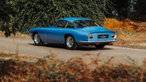
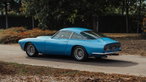
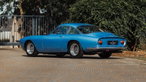
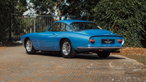
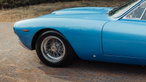
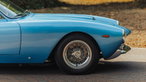
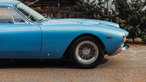
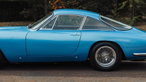
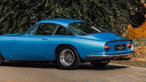
The Lusso's extraordinary shape was penned by Pininfarina and executed by Carrozzeria Scaglietti in Modena. The result is widely regarded as one of the defining designs of the 1960s, and one of the most beautiful Ferraris ever built. Its proportions are exceptionally well resolved, combining long, flowing surfaces and delicate detailing with a subtle sporting edge. The finely rendered egg-crate grille, pronounced front fenders, slender greenhouse, and abbreviated Kamm tail give the Lusso an unmistakable presence without ever appearing overstated.
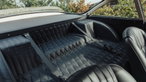
Underneath that elegant coachwork is a tubular steel chassis derived from the architecture of the 250 GT SWB, employing two large-diameter oval longitudinal frame members joined by crossmembers. To improve the accommodation of its occupants, Ferrari moved the engine farther forward, allowing the Lusso to offer a notably more generous cabin than its sporting sibling. It remained, importantly, a strict two-seater rather than becoming a 2+2, with comfortable seating and a particularly useful rear parcel shelf for luggage, finished in beautifully quilted leather.
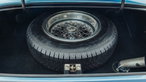
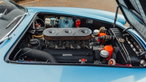
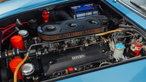
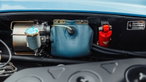
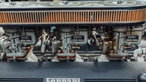
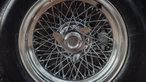
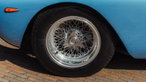
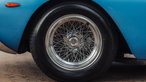
Power comes from Ferrari's Tipo 168 U 3.0-liter V12, an all-aluminum evolution of Gioacchino Colombo's celebrated twelve-cylinder design. Fed by three twin-choke Weber carburetors, the engine developed approximately 240 horsepower, giving the Lusso the effortless pace for which Ferrari was renowned while preserving the refinement expected of a true grand tourer. Four-wheel disc brakes, Koni shock absorbers, a rear Watts linkage, and knock-off Borrani wire wheels completed a sophisticated mechanical package that was as capable as it was beautifully engineered.
Despite its primary purpose as a car for grand touring and long-distance travel in comfort and style, the Lusso was never far removed from Ferrari's sporting heritage. Period examples were entered in legendary events including the Targa Florio and the Tour de France Automobile, demonstrating that its elegant appearance concealed very real sporting ability and it remains eligible today for such events as the Tour Auto and Targa Florio Classica.
As the final chapter in Ferrari's great 250 dynasty, a lineage that began in the early 1950s with the 250 S, the 250 GT Berlinetta Lusso represents the ultimate expression of the 250 GT formula: a sophisticated V12 grand tourer combining performance, beauty, and long-distance usability in near-perfect proportion. And yet, for all its significance as the culmination of the 250 era, the Lusso feels less like an epilogue than a preface, subtly anticipating the direction Ferrari would take in the years that followed.
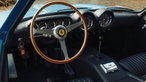
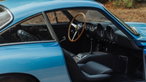
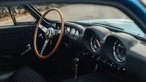
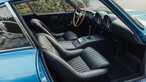
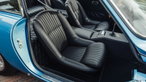
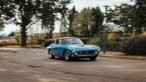
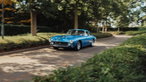
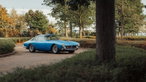
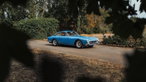
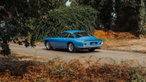
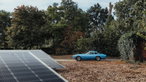
One of the very last examples built, the 347th of just 350 produced, this 250 GT Berlinetta Lusso was completed in July 1964 in the elegant combination of Azzurro Metallizzato over a black leather Pelle Nera interior, complemented by Borrani wire wheels. It was purchased new directly from the Ferrari factory for 5,750,000 Italian lire by Francesco di Benedetto, who traveled from Sicily across Italy to Maranello.
The Lusso was registered on 4 August 1964 as "CL 18200." Its first owner made enthusiastic use of the car, presumably undertaking lengthy journeys between Sicily and northern Italy. In just a year and a half, it accumulated more than 21,000 kilometers and was regularly serviced and maintained by Ferrari's Assistenza Clienti in Modena, before being sold in February 1966 to its second owner, the car being re-registered in Bologna as "BO 265104." Its early history is documented by a copy of the ownership records issued by the Automobile Club d'Italia, detailing its changes of ownership before the car left Italy, and is further supported by a report from Ferrari historian and marque specialist Marcel Massini, available on file.
The Lusso subsequently crossed the Alps and would remain in Germany for some four decades, passing through the hands of several enthusiasts and notably being presented by the well-known German Ferrari specialist and dealer Peter Groh at the Auto Becker Ferrari meet at the Nürburgring on 4 June 1980.
In 1989, the car joined the renowned Rosso Bianco Collection of Peter Kaus. Established as a museum in 1987, the Italian-German collection comprised prototypes that had competed in major endurance races alongside highly luxurious GTs. The Lusso was kept in climate-controlled storage, regularly maintained, and used sparingly during its time in the collection, then sold in 2006, when Peter Kaus closed the museum and dispersed his collection.
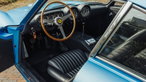
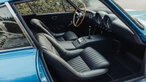
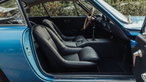
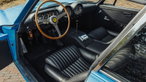
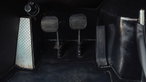
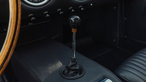
In 2010, the Lusso underwent a comprehensive restoration in Italy, entrusted to the Ferrari specialist Toni Franco. At his Autofficina in Maranello, the car's mechanical components were completely restored, while the interior was entirely retrimmed in black leather by Tappezzeria Luppi of Modena. The cosmetic restoration also included a high-quality bare-metal repaint in its original color of Azzurro Metallizzato.
Following this restoration, the car received its Ferrari Classiche certification, accompanied by its "Red Book," issued in June 2011. Available on file, it confirms the authenticity of the car's major components, including its original engine, transmission, differential, and body.
Its current owner, an experienced collector and true connoisseur of fine and particularly sporting automobiles, acquired the Lusso nearly 15 years ago. Since then, the car has been maintained by Monza NV and F.M.A. official Ferrari dealers in Belgium, with invoices on file.
Presented today in its original color combination and confirmed by Ferrari Classiche as a fully matching-numbers example, this 250 GT Berlinetta Lusso is among the most desirable road-going Ferraris of the marque's golden 250 era. Rare, beautifully presented and documented, it would make an outstanding centerpiece for any distinguished Ferrari collection.


Watch our latest YouTube videos
Verwandte Anzeigen zu Ferrari 250


Empfohlene Angebote


