
1964 Citroen 2CV
2CV 4×4 Sahara-
Baujahr1964
-
AutomobiltypSonstige
-
Chassisnummer17. Oktober 2026
-
Losnummer218
-
Referenznummerhg_95e84bcfae4f
-
LenkungLenkung links
-
ZustandGebraucht
-
InnenfarbeSonstige
-
Standort

-
AußenfarbeSonstige

Beschreibung
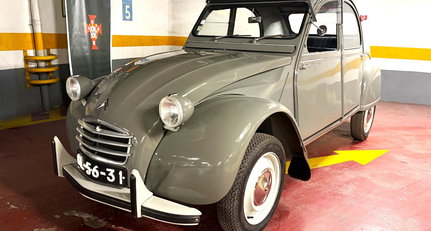
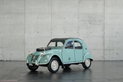
One of only 694 four-wheel-drive 2CVs built
Just five are believed to have been assembled in Belgium
One of the most unconventional off-road vehicles of all time
A more than rewarding restoration project
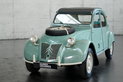
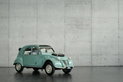
When Citroën presented a four-wheel-drive 2CV in 1958, the concept was as simple as it was unconventionally French: two engines for two driven axles. And so, based on France’s very own people’s car, emerged one of the most unusual off-road vehicles of its time.
The 2CV, later christened ‘Sahara’, was intended primarily for parts of the world where roads were regarded more as a non-binding recommendation. Oil companies, geologists, the military and government agencies needed a lightweight vehicle capable of tackling sand, rocks and poor tracks in North Africa. Rather than developing a complicated four-wheel-drive system, Citroën simply installed a second air-cooled flat-twin in the rear. One drove the front wheels, the other the rears. Each had its own gearbox, and the two could be operated either together or independently. Each engine produced 13 hp; working together they were good for 105 km/h, while one alone managed just 65 km/h. If one engine failed, you simply carried on with the other. Mechanical redundancy, done the very French way.
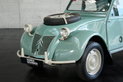
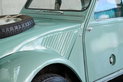
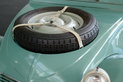
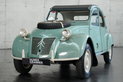
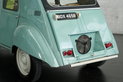
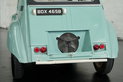
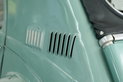
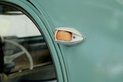
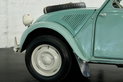
To make room for the rear engine, the spare wheel migrated onto the bonnet, while additional air intakes in the rear wings provided cooling. Two 15-litre fuel tanks beneath the front seats supplied the respective engines. The chassis was reinforced and fitted with underbody protection. Comfort, meanwhile, remained roughly where it had always been in a normal 2CV: somewhere near the bottom of the list of priorities.
Off road, however, the lightweight Citroën proved remarkably capable. Where heavier vehicles sank, the little 2CV simply bounced its way onwards. Such extravagance did not come cheaply, though. At times, the Sahara cost almost twice as much as an ordinary 2CV and consequently remained a rare sight.
Only 694 examples were built between 1960 and 1968. Following Algerian independence, Citroën changed the name to ‘4×4 bimoteur’ in 1962. A car with two engines, two gearboxes and just two cylinders at either end – simplicity could hardly have been made more complicated.
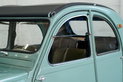
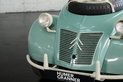
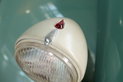
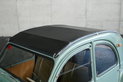
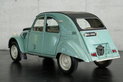
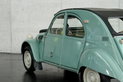
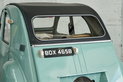
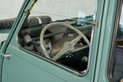
Only a small handful of four-wheel-drive 2CVs are said to have been assembled at Citroën’s Brussels factory. This is believed to be one of them. It has travelled widely, having once been registered in Belgium, later in Spain, then in England and most recently in the Netherlands. It runs, although at present on only one of its two engines. A few things will need attending to before anyone sends it back into the desert. More to the point, this exceedingly rare bird has surely earned itself a complete restoration by now.

Watch our latest YouTube videos
Verwandte Anzeigen zu Citroen 2CV


Empfohlene Angebote